The CEO of IFI, Totti Könnölä conducted with Philine Warnke and Ralph Gutknecht, from the Fraunhofer ISI a study on “Expectations and assumptions for the future in the Work Programme 2021-2022 of Horizon Europe”. The study scanned the HE Work Programme 2021- 2022 for assumptions and expectations about the future and conducted a Delphi survey of experts on the likely time of realization of those expectations and assumptions. The analysis revealed three overlapping, but distinct types of challenges associated with assumptions and expectations that should be recognised in future work programmes: policy challenges, diversification challenges and reflexivity challenges.

When it comes to policy changes, some goals are seen as valuable but unrealistic due to limited R&I potential and political barriers. Future programs could focus on areas with favorable conditions for R&I, integrate social sciences and stakeholder dialogues, or align R&I with other policies like agriculture. However, success isn’t guaranteed as social, and policy changes are slow. Examples include sustainable agri-food systems, industrial and transport decarbonization, and personalized health.
The category of diversification challenges includes goals seen as controversial or unsolvable. Reframing problems and diversifying approaches, especially by incorporating societal change perspectives (e.g., human behavior, social innovation), may help. Integrating or connecting research teams could improve outcomes. Examples of this are circular products, sustainable energy, and digital agriculture.
About reflexivity challenges, it is known that in some cases, refining key concepts and fostering shared understanding among stakeholders (e.g., patients, CSOs) is needed. Examples of the study include “One Health” and “strategic autonomy.”

Challenges were categorized into near-term (now–2030), mid-term (2030–2050), long-term (2050–never), and inconclusive (divergent opinions). Experts’ comments were further analysed to see if the statements’ goals were shared or contested. The study highlights 27 statements offering key insights: some show near-term issues are almost resolved, suggesting more ambitious future programs; others with long-term or “never” timelines imply unrealistic goals needing adjustments; and contested statements point to the need for deliberative processes or alternative approaches. This study concludes with lessons for future work programmes and specific cluster findings, with annexes detailing original assumptions and survey data.
The study found that while most expectations in the Horizon Europe Work Programme 2021-2022 are broadly shared, many are controversial or risky due to three main factors:
a) Goals with long-term, uncertain outcomes needing justification for current relevance.
b) Goals already achieved or near completion, questioning Horizon Europe’s role.
c) Inherently controversial goals requiring consideration of diverse viewpoints.
Most expectations fit a mid-to-long-term horizon, aligning with Horizon Europe’s ambitions. However, three overarching challenges were identified:
- Policy Challenges:
Some goals, though relevant, are unrealistic due to political barriers or limited R&I potential. Solutions include focusing on areas with favourable conditions, integrating social sciences and stakeholder dialogues, or aligning R&I with other policies like agriculture. Examples include sustainable agri-food systems, industrial decarbonization, and personalized health. - Diversification Challenges:
This group includes topics with disagreement on goals or deemed unsolvable. Reframing problems and integrating societal perspectives (e.g., human behaviour, social innovation) could help. Connecting research teams may also enhance effectiveness. Examples of this are circular products, sustainable energy, and agricultural digitalization. - Reflexivity Challenges:
Some topics require clearer conceptual understanding, suggesting the need for shared frameworks and integrating key users like patients or CSOs. For example, “One Health” and “strategic autonomy.”
Authors
European Commission: Directorate-General for Research and Innovation, Warnke, P., Gutknecht, R. and Könnölä, T., Expectations and assumptions for the future in the work programme 2021-2022 of Horizon Europe – Foresight on demand (FoD), Publications Office of the European Union, 2023.
 Invited speech of Dr. Totti Könnölä, CEO inf Insight Foresight Institute in the scientific conference ‘Bioengineering for Healthy Ageing. Adding Life to Years’ November 9th 2017, CosmoCaixa Barcelona.
 The ‘deep dive’ workshop for the EURO-CASE Innovation Platform was organised by the Royal Academy of Engineering of Spain (RAI), with José Manuel Sanjurjo as chair and Francisco Jariego, member of the Innovation Council of IFI, in colaboration with Totti Könnölä, CEO of IFI, in Madrid on January 30-31, 2017. The workshop focused on ‘SMEs, innovation and industrialisation’. The work built on the background discussion paper and the results of the Euro-CASE survey. This provided a basis for the integrated analysis on industrial innovation towards the year 2030 through industrial platform ecosystems that engage value networks of industrial providers, customers but also research and technology organisations (RTOs), Universities, startups and other SMEs as well as investors, public sector agencies and regulators. Particular attention was given to the future role of SMEs and the barriers to scale-up. Also recommendations were drawn to provide inputs to European policy-making.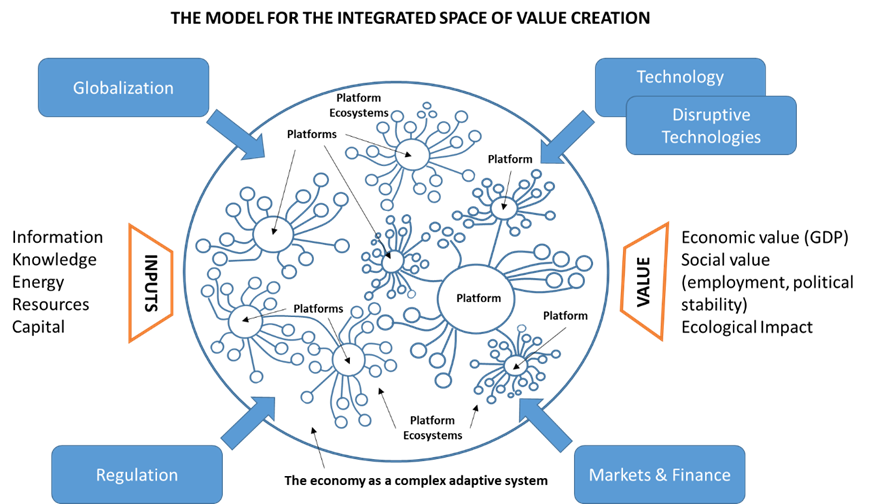
 The co-founder of IFI, Totti Könnölä co-authored the European Foresight Platform brief on the foresight programme, of which overall objective was to enhance innovation-driven sustainable economic development of the Antofagasta region in Chile. The main purposes of the foresight
