Insight Foresight Institute

Transforming Innovation Ecosystems

  • About us
    • Our Community
    • Follow us and share
    • Contact us
  • Ecosystems
    • Corporates
    • Policymakers
    • Startups
  • Solutions
    • Activation & Alignment
    • Insight Foresight
    • Strategy & Governance
    • Training & Mentoring
    • Programming & Implementation
  • Sectors
    • Education
    • Research and Innovation
    • Services
    • Energy and Environment
    • Health and Social Care
    • ICT
    • Manufacturing
    • Transport and Infrastructure
  • Outreach
    • Press
    • Events
    • Videos
    • Reports
    • Position Papers
    • Follow us and share
  • English
    • Spanish
You are here: Home / Archives for webmaster

IFI in the IND+I 2020 event

IFI collaborates with the IND+I 2020 event that is organized in Viladecans on April 2, 2020. In addition, the president of our board, José Manuel Leceta gives the presentation with the title: ‘towards a new agreement in Industry and Innovation’.
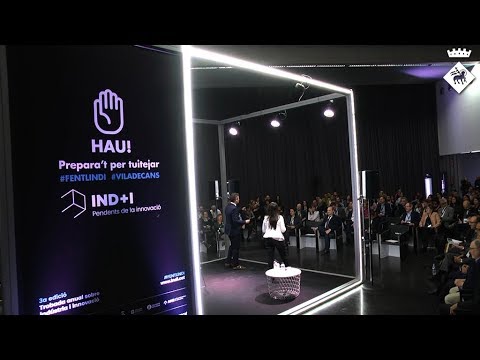
IFI in the IND+I 2020 event


This year’s IND+I agenda is around new horizons for a sustainable lifestyle. The IND+I 2020 conference wants to reflect on the contribution of the industry to the achievement of the SDGs and how they frame concrete market solutions to the challenges of the planet and specifically of our cities. But we want to go further and think about opportunities and challenges that life outside the Earth can generate for companies, governments and citizens. In this edition of IND+I Day we will propose and analyze new horizons on Earth, with the responses to climate change and compliance with the SDGs, but also new horizons in life outside the Earth, as generators of innovative solutions.

In this year’s edition, we will delve into concrete market solutions to guide entrepreneurship, technology and innovation towards large missions and tractor projects related to the SDGs, as well as new challenges related to life outside the Earth.

As an event collaborator, IFI has tickets available for its board and council members. We have 10 free tickets, first come first served, write us to info@if-institute.org.
For more information

the IND+I 2020 event

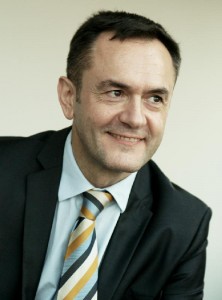
José Manuel Leceta, Chair

Leceta1José Manuel Leceta is the Chairman of the IFI High-Level Advisory Board. Former DG of Red.es from 2016-2018. Former Director of the European Institute of Innovation and Technology (EIT) from 2011 to 2015. Former International Director of the Center for the Development of Industrial Technology (CDTI) from 2004-2010.


Jose Manuel was Director General of Red.es, the Spanish Government Digital Transformation Agency from November, 2016 to July, 2018 where he revamped the 15 years old organization with a new Strategic Plan, Operational Plan and innovative culture. Before, following a European-wide competition involving circa 200 candidates, José Manuel was appointed Director of the European Institute of Innovation and Technology (EIT) in 2011 nurturing partnership relations with EIT’s Knowledge and Innovation Communities (KICs) and inspiring first offerings as an Institute for Europe which he codified later as visiting fellow of the European University Institute (EUI).

Formerly, before joining EIT, he was CDTI’s International Director from 2004 to 2010, where he successfully raised the Spanish participation in the EU R&D Framework Programs by 50 %. He also represented Spain in CREST, Eureka and TAFTIE – serving as Executive Secretary in 2010 – and widened CDTI´s Overseas Network with Delegations in India and the US, successfully launching a set of Bilateral Programs.

Having joined CDTI in 1992 to foster Spain´s role and leadership in the practical applications of space, he became Head of Department for Technologies and Space Programs at CDTI in 1996. From 200 to 2002 he was Chairman of the European Space Agency Ariane Board and Vice-Chairman of Telecommunication Board. Also, he played a pivotal role in pioneer space initiatives, notably ESA´s water mission SMOS, AMERHIS (first Hispasat on-board digital multiplexers) and EGNOS-Galileo.

A Telecommunications Engineer from the Technical University of Madrid, José Manuel also studied Business Administration and has diplomas in Space Studies (ISU), Strategic Management of ICT, Economics of Telecommunications, International Studies and Economics and Management of Innovation. He started his business career in Finland in 1987, working thereafter in space industry in France, Spain and Japan.

122

IFI in the Forum of Cities, towards the circular economy

Managing Director of Insight Foresight Institute (IFI), Totti Könnölä participates in the round table on cities that move towards the circular economy, in the third edition of the Forum of the Cities of Madrid IFEMA (13-15 June 2018) that will once again offer a a cross-sectional look at the world of cities, their innovative management and the role played by all the actors that interact in urban environments.

CITIES THAT TRANSIT TO THE CIRCULAR ECONOMY

Afternoon session 15.45-17.20, 14 June.

Opening presentation

• City of Madrid. Inés Sabanés, Councilor of the Government Area of ​​Environment and Mobility.

Discussion-round table

• City of Girona. Empar Vila, Head of Urban Services.

• Ecohispanic. Christian Manrique, General Director.

• FORETIC. Elena Ruiz, Coordinator of the Action Group in Circular Economy.

• Circular Economy Foundation. Anabel Rodríguez, Director.

• Totti Kónnölä, member of the “100 of COTEC” network. Director of IFI. Expert in innovation ecosystems.

Moderates and energizes: Plataforma Envase y Sociedad, Miguel Aballe.

The city for citizens will be the main axis on which all the themes will revolve, an approach that has always been the distinguishing feature of the Forum of the Cities of Madrid. For this reason, a part of the program will be devoted to discussing the so-called “NEW URBAN ECONOMIES”.


All the presentations, good practices and debates of the IFEMA 2018 Madrid Cities Forum will be included in a FREE DIGITAL BOOK, just like in its two previous editions, in order to disseminate information and knowledge about the sustainable, inclusive and green management of our cities.

INNOGREEN Research (ES)

INNOGREEN Research was established in Madrid (Spain) as an initiative to consolidate many years of joint efforts of researchers around eco-innovation and circular economy research to advance knowledge and achieve a wider impact in society.

Systemic visions and experimentation – corner stones for ‘missions’

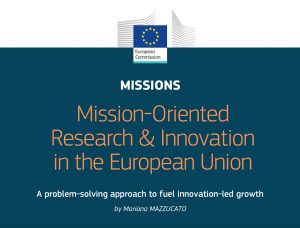
As a response to the Commission public consultation on the report of Professor Mariana Mazzucato on ‘Mission-Oriented Research and Innovation in the European Union – A problem solving approach to fuel innovation-led growth‘ Insight Foresight Institute remits the following suggestions for wider consideration on the implementation of the mission-oriented innovation policy in Europe.

‘Criteria for how EU research and innovation missions should be selected.’

EU R&I missions should be bold, inspirational with wide societal relevance and cross-disciplinary, cross-sectoral and cross-actor efforts. It may be worth considering also the areas where EU has the greatest potential to contribute based on its capacities and competitive strengths.

The mission, while being a broad statement, also holds the risk of being too abstract to be targeted, measurable and time-bound. Furthermore, the notion of multiple bottom up solutions may counter to the expectation of realistic actions since if it is known to be realistic then why would multiple paths be needed. Ultimately the missions being bold they also entail the risk and uncertainty, for instance suggesting difficulties in setting the right time-bound criteria at the outset. The visions as such would better avoid also artificial limits for improvement. For instance, in case of reducing carbon emissions, the mission could well target going even beyond carbon neutral.

For mission-oriented policies to be truly systemic the missions would be better framed with systemic visions encompassing multiple-dimensions on the future techno-institutional and socio-economic systems. The experimentation of the alternative pathways would still be guided by such systemic visions and help identify complementarities and synergies of diverse efforts. In particular, without such systemic visions, there exists a risk of repeating the issues confronted in earlier efforts like in case of the European partnerships that tended to result to the broad networks of rather fragmented projects.

Defining the mission around a single criterion like a carbon neutral city or plastic free ocean holds the risk of losing some focus on other relevant criteria for development, consider for instance the hailed diesel engines as a low carbon solution that led to the rise of other serious air emissions. The very idea of sustainable development is to simultaneous explore win-win-win solutions across economic, social and ecological challenges.

‘Implementation of research and innovation missions’

The extensive inclusion of actors from a diverse group of European countries, including central and peripheral countries and regions can be an invaluable asset. However, national and regional stakeholders may too often have competing agendas that reduce the focus to serving neither and risk not addressing the needs of the largest constituency of society. Therefore, the intensity of the engagement of different stakeholders is better driven by their competencies and specific purpose of each mission. It is important that the best talents find their way to contribute the missions. Any calls for proposals of R&I projects may leave some high potential talents excluded. Here the good practices of ERC might be worth a consideration. Missions could also seek closer coordination with international organizations and other third countries.

An impartial appraisal of the progress and the impact as well as the flexible management are the key for effective missions. The implementation of EU R&I missions should be flexible, with pro-active management and building in-house capabilities and through a portfolio of instruments to foster bottom up solutions. The timelines and milestones set in the outset are better revised based on the improved understanding attained along the implementation phases of ambitious missions entailing uncertainties.

‘Citizens should be consulted on the choice of missions’

A broad consultation may benefit the exploration and definition of possible missions to better address societal needs and avoid bias over any single actor. However, this may become demanding from a methodological point of view (whom to consult, by which channels, using which methods) and turn out to be time-consuming, especially to thoroughly process the opinions and suggestions collected, and thus rather expensive.

Furthermore, framing a mission may require considerable technical and context specific understanding which reduces the value or suitability of public consultation or referendum for purpose of the selection or priority setting of missions. This would assume that the citizens have been educated sufficiently to understand the issues and the challenges related to the mission. Missions might be proposed to be a subject of public consultation even in situations where the citizens may not be related to due to lack of direct experience or the benefits of the mission being too far in the future.

Hence, the views of stakeholders and diverse set of citizens might be best integrated in early exploratory phases (e.g. via foresight) rather than in the later phases of the policy cycle when the mission has been largely defined and the consultation may merely seek for ‘approval’. One way for developing citizen insight on issues is the use of living labs and new methods of user-centred design for feedback. This process may facilitate a broad cross section of individuals from society.

 ‘Ideas for EU research and innovation missions’

  • Smart Energy Systems. Europe can lead the transition towards distributed and smart energy systems for enhancing sustainable production, distribution and storage of energy.
  • Cradle to Cradle Economy. The EU should become world leader in sustainability transition following the cradle to cradle design principles and learning from the experimentation across different sectors.
  • Intelligent Reforestation. European forest management could gain momentum with new sustainable smart solutions for reforestation as means to fight desertification and mitigate the impacts of climate change.
  • Beyond Jobs. Europe should lead a new way to understand that jobs are only a means. Social innovation is urgently needed to develop alternatives to jobs as the only way to gain access to wealth.
  • Digital Democracy. Europe can lead exploiting the capabilities of technology to create an open and engaged society while making the most of “collective intelligence”. Democracy should be understood as a better way to solve certain complex social problems than markets or hierarchies.
  • « Previous Page
  • 1
  • 2
  • 3
  • 4
  • 5
  • 6
  • …
  • 10
  • Next Page »

Insight Foresight Institute (IF-Institute)

C/ Isabel Colbrand 6, Quinta Planta.
28050 Madrid, Spain
info@if-institute.org
tel. +34 600842168


Copyright © 2025 · Insight Foresight Institute · Terms and Privacy · Cookies · Fotos: Shutterstock · info@if-institute.org · Tel. +34 600 842 168
  • English
  • Español
We use cookies to ensure that we give you the best experience on our website. If you continue to use this site we will assume that you are happy with it.